

Skip to content
platform banner

Connecting users, locations, applications & workloads

Carrier‑grade enterprise connectivity solutions that unify users, sites, data centres, clouds, and applications, seamlessly and at scale.

Need help mapping your network journey?

fluent_globe-desktop-24-regular
Global Offices
Reliable amd seamless connectivity for your offices
and enterprise sites
.
Data Centres
Private dedicated connectivity between your global data centres
Business Partners
Scalable and resilient interconnection to your
business partners
fluent_building-desktop-24-regular
Hybrid Workforce
Flexible and secure access for your hybrid and remote teams
platform banner

The Orixcom Platform

Explore an enterprise-ready portfolio of products built to support complex business goals and long-term growth.


Need help mapping your connectivity journey?

Colocation
Observability
for Menu

Securing users, devices & workloads, anytime, anywhere.


Need help mapping your SASE journey?

for Menu

Need more information?

Our team is always here to help you, just reach out anytime.

Multicloud
Connect

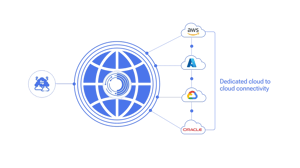
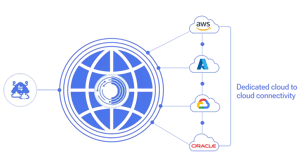
Connect your clouds with ease. Orixcom's multicloud networking services deliver fast, reliable, and cost-efficient cloud connectivity across AWS, Oracle, Azure, Google and more.

MulticloudConnect

Benefits of Orixcom MulticloudConnect

Connect multiple clouds any time

Seamlessly link AWS, Azure, Oracle, and more without complexity.

 
Enhance performance Optimised routing for faster, more reliable application delivery across clouds.
 
Minimise latency Direct cloud-to-cloud paths reduce delays and improve responsiveness.
 
Simplify management

Centralised control eliminates complexity and streamlines operations.

 
Reduce costs Lower egress fees and shift from CAPEX to OPEX for better ROI.  
Stay flexible Avoid vendor lock-in with a cloud-neutral, easily reconfigurable platform.
 
Deploy on demand Spin up network functions in minutes to meet changing business needs.
 

Scale your multicloud environments with ease

Ensure fast, resilient, and direct connectivity to multiple global cloud platforms, including AWS, Azure, Google Cloud, OCI, and more with Orixcom MulticloudConnect.

PRICE STARTS FROM $1/mbps

Navigate the multicloud
landscape

Connecting multiple clouds shouldn’t be complex. We make it simple to link AWS, Azure, Oracle, Google, and more with private, dedicated, and reliable multi cloud network connectivity solution. Our focus is on cloud-to-cloud networking, enabling businesses already using multiple providers to integrate them seamlessly.

Whether you run Oracle Cloud for backend databases and AWS for web services, or any other combination, Orixcom ensures fast, secure, and cost-efficient connectivity between your environments. This means better performance, lower costs, and the flexibility to scale your multicloud strategy without vendor lock-in.


Where it works best:

  • Cloud-to-cloud connectivity – Direct, low-latency links between multiple clouds.
  • Hybrid cloud integration – Seamless connection between on-prem and cloud environments.
  • Disaster recovery – Reliable, fast failover across cloud platforms.
  • Data migration – Secure, cost-efficient transfer between clouds.
  • Global expansion – Rapid deployment of cloud services worldwide.


Trusted testimonials. Real experiences.

Discover more about
Orixcom MulticloudConnect

wasl success story
Success Stories

Majid Al Futtaim’s Multicloud strategy:
Driving agility and performance

Facts & Numbers
99%
Reduction in downtime: Al Gurg’s Multicloud success story
Glossary

What is cloud connectivity?

 

sd-wan vs mpls comparison
Blog
Seamless Multicloud connectivity, powered by Orixcom

FAQ

Can't find what you're looking for?
What is MulticloudConnect ?

MulticloudConnect or previously multicloud networking refers to the practice of connecting and integrating networking resources and services across multiple cloud computing platforms. This approach allows organisations to design, deploy, and operate networks that span various public and private cloud environments. Key aspects of multi-cloud networking include:

  • Automated connectivity: Providing policy-based connectivity for distributed workloads across different clouds.
  • Consistent network policies: Enabling uniform network policy, security, governance, and visibility through a single management point.
  • Extending capabilities: Facilitating the extension of network capabilities across leading public cloud providers such as AWS, Azure, Google Cloud, and others.
  • Seamless communication: Ensuring smooth data and application communication between diverse cloud platforms.

Multi-cloud networking solutions help organisations avoid vendor lock-in, reduce complexity, and create infrastructure autonomy by simplifying networking across disparate cloud environments.

What are the key features of multi-cloud architecture?

Multi-cloud architecture incorporates several key features that enable organisations to leverage multiple cloud platforms effectively:

  1. Distributed deployment patterns:
    • Tiered hybrid pattern: Application tiers are distributed across multiple clouds.
    • Partitioned multi-cloud pattern: Functional components are hosted on different clouds.
    • Cloud analytics pattern: A separate cloud is dedicated to analytics workloads.
    • Edge hybrid: Integration of edge computing with cloud resources.
  2. Robust networking:
    • Inter-cloud connectivity ensures secure communication between environments.
    • Network security measures such as firewalls and encryption enhance protection.
    • Efficient data transfer mechanisms optimise performance.
  3. Abstraction and standardisation:
    • A decoupled architecture avoids dependency on a single provider.
    • A standardised framework allows for consistent implementation across diverse cloud environments.
  4. Management and optimisation:
    • Automation tools assist in managing deployments and scaling resources effectively.
    • Monitoring solutions track performance and detect issues promptly.
    • The ability to leverage unique strengths of different cloud providers enhances overall efficiency.
  5. Enhanced resilience and flexibility:
    • Risk mitigation is achieved through the distribution of workloads across multiple clouds.
    • Organisations can choose best-of-breed services from various providers based on their specific needs.

By incorporating these features, multi-cloud architecture enables organisations to create a flexible, resilient, and optimised IT infrastructure that can adapt to changing business needs and technological advancements.

What is the difference between cloud and multi-cloud?
 
  • Cloud refers to using services from a single cloud provider (like AWS, Microsoft Azure, or Oracle Cloud) for computing, storage, networking, and applications. All resources are hosted and managed within that one provider’s environment.

  • Multi-cloud means using two or more cloud providers simultaneously. For example, a business might run applications on AWS while storing data in Oracle Cloud and using Microsoft Azure for analytics. This approach helps avoid vendor lock-in, improves resilience, and allows organizations to choose the best services from each provider.

What are some tips for adopting a multi-cloud strategy?
  1. Define clear objectives: Set strategic goals for multi-cloud adoption that align with organisational needs.
  2. Establish a governance framework: Develop policies for security, compliance, and cost management across multiple cloud environments.
  3. Implement real-time cost monitoring: Use tools to track spending across all clouds, identifying inefficiencies and areas for cost savings.
  4. Leverage automation: Automate processes to manage complexity and ensure consistency across different cloud platforms.
  5. Adopt a zero-trust security approach: Implement strong security measures that work across all cloud environments.
  6. Create a single pane of glass: Use management tools that provide unified visibility and control across all cloud services.
  7. Standardise workload distribution: Strategically allocate workloads based on each cloud provider's strengths and your specific requirements.
  8. Develop a strong data governance programme: Ensure visibility of data location across all cloud platforms.
  9. Focus on integration and management: Develop strategies for data pipeline monitoring, ITSM integration, and application lifecycle management.
  10. Continuously optimise: Regularly review and adjust your multicloud strategy to maximise benefits and address evolving needs.

Transform your multicloud strategy

Take the first step towards a more efficient, flexible, and high-performance network infrastructure. Contact Orixcom to discover how our MulticloudConnect can accelerate your business growth.