

Skip to content
platform banner

Connecting users, locations, applications & workloads

Carrier‑grade enterprise connectivity solutions that unify users, sites, data centres, clouds, and applications, seamlessly and at scale.

Need help mapping your network journey?

fluent_globe-desktop-24-regular
Global Offices
Reliable amd seamless connectivity for your offices
and enterprise sites
.
Data Centres
Private dedicated connectivity between your global data centres
Business Partners
Scalable and resilient interconnection to your
business partners
fluent_building-desktop-24-regular
Hybrid Workforce
Flexible and secure access for your hybrid and remote teams
platform banner

The Orixcom Platform

Explore an enterprise-ready portfolio of products built to support complex business goals and long-term growth.


Need help mapping your connectivity journey?

Colocation
Observability
for Menu

Securing users, devices & workloads, anytime, anywhere.


Need help mapping your SASE journey?

for Menu

Need more information?

Our team is always here to help you, just reach out anytime.

Zero Trust Network Access

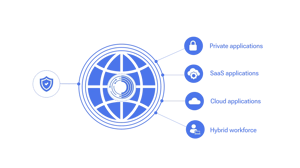
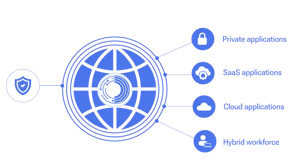
Cisco Duo's Zero Trust Network Access (ZTNA) solution secures all access across your applications and environment, from any user, device and location.

ZTNA

Benefits of Orixcom ZTNA

Establish user trust Verify user identity with Duo MFA and Duo Push. Prevent credential-based attacks and ensure secure, seamless authentication.  
Enforce adaptive access policies

Apply contextual policies based on user role, location, device type, and risk level. Grant least-privilege access to protect sensitive resources.


Secure access to all applications Enable secure access to cloud and on-prem apps using trusted user and device validation. Strengthen your security posture across platforms.  
Establish device trust Assess device health during login to ensure only secure endpoints connect to your systems, regardless of user identity.  
Gain visibility into user devices Monitor device posture and software status to identify vulnerabilities. Ensure only compliant devices are granted access.  
Unmatched value with Duo Security Simplify ZTNA deployment with Duo’s integrated MFA, passwordless login, SSO, and self-service tools, reducing IT overhead.  
Schedule a ZTNA demo Talk to us to explore how Zero Trust can secure your workforce and simplify access management.  

Secure your hybrid worforce with ZTNA

Zero Trust Network Access (ZTNA) delivers secure, identity-based access to applications, no matter where users are located. By verifying user identity and device health before granting access, ZTNA ensures only authorised users connect to the resources they need.

ZTNA also integrates seamlessly with Duo MFA, enabling fast, secure authentication via Duo Push. Combined with adaptive access policies and full visibility into user devices, it creates a resilient framework for secure remote work.


With Cisco ZTNA, implicit trust is eliminated. Access is granted based on context, such as user role, location, and device posture reducing the risk of lateral movement and protecting sensitive data.

This approach strengthens your remote access strategy while minimising attack surfaces, ensuring that only trusted users and devices interact with your critical applications.

Trusted Testimonials. Real Experiences.

Discover more about
Orixcom ZTNA

The image depicts a modern office environment with diverse employees engaged in collaborative work A central glass conference room features a large screen displaying a digital flowchart illustrating the integration of SDWAN and Zero Trust Network Acc-2
Blog
Achieving zero trust with SD-WAN:
The foundation of a SASE-enabled architecture
Facts & Numbers
70%
Phishing attacks are driven by Artificial Intelligence.
Blog
5 ways businesses in UAE combat cyberattacks
ip transit def
Blog
Managing data security in a hybrid workspace

FAQ

Can't find what you're looking for?
What is Zero Trust Network Access (ZTNA)?

ZTNA is a security approach that assumes no user or device is trusted by default and grants access only to specific applications based on identity, device health, and context. It reduces the attack surface by avoiding broad network access and instead providing controlled, application‑level access.

How is ZTNA different from a traditional VPN?
 
A VPN typically gives users wide access to the internal network once connected, which can enable lateral movement if an account is compromised. ZTNA, by contrast, grants least‑privilege, app‑level access and continuously verifies user and device trust, significantly limiting exposure.
Is ZTNA only for remote workers? ZTNA is ideal for remote and hybrid users but can also secure on‑site users accessing sensitive apps. Many organizations use ZTNA as a unified model for all access so policies are consistent regardless of location.
How does ZTNA improve user experience? Modern ZTNA solutions can provide direct, optimized connections to applications rather than backhauling all traffic through a central data center. This often leads to lower latency and simpler, SSO‑based access while maintaining strong security.
What security controls are typically part of ZTNA? ZTNA commonly integrates identity and access management, device posture checks, micro‑segmentation, continuous monitoring, and centralized policy enforcement. These elements work together to implement least‑privilege access and detect abnormal behavior in real time.
Can ZTNA protect both on‑premises and cloud applications? Yes, ZTNA is designed to secure access to private data‑center apps, IaaS workloads, and SaaS applications under a single policy framework. This unified model helps organizations move away from separate remote access tools for each environment.
What happens if a device becomes non‑compliant mid‑session? ZTNA can continuously assess device posture and user behavior and automatically revoke or downgrade access if risk levels change. Policies can force re‑authentication, trigger MFA, or terminate the session to prevent misuse.
How does ZTNA help with compliance and auditing? ZTNA centralizes logging of who accessed which application, from which device, and under what conditions. This level of detail supports compliance requirements around access control, auditing, and incident investigation.

Implement a zero trust strategy today

Enable secure, seamless access for all users, across any device, location, or application.